

Econ Nobel Prize Lecture: Philippe Aghion at CREST and Institut Polytechnique de Paris

On January 12, 2026, CREST and the Department of Economics of Institut Polytechnique de Paris welcomed a large audience for its annual lecture devoted to the Nobel Prize in Economics, hosted at CREST-ENSAE Paris.
The event featured Philippe Aghion, one of the recipients of the 2025 Nobel Prize in Economics, together with Antonin Bergeaud, winner of the 2025 Best Young Economist Prize.
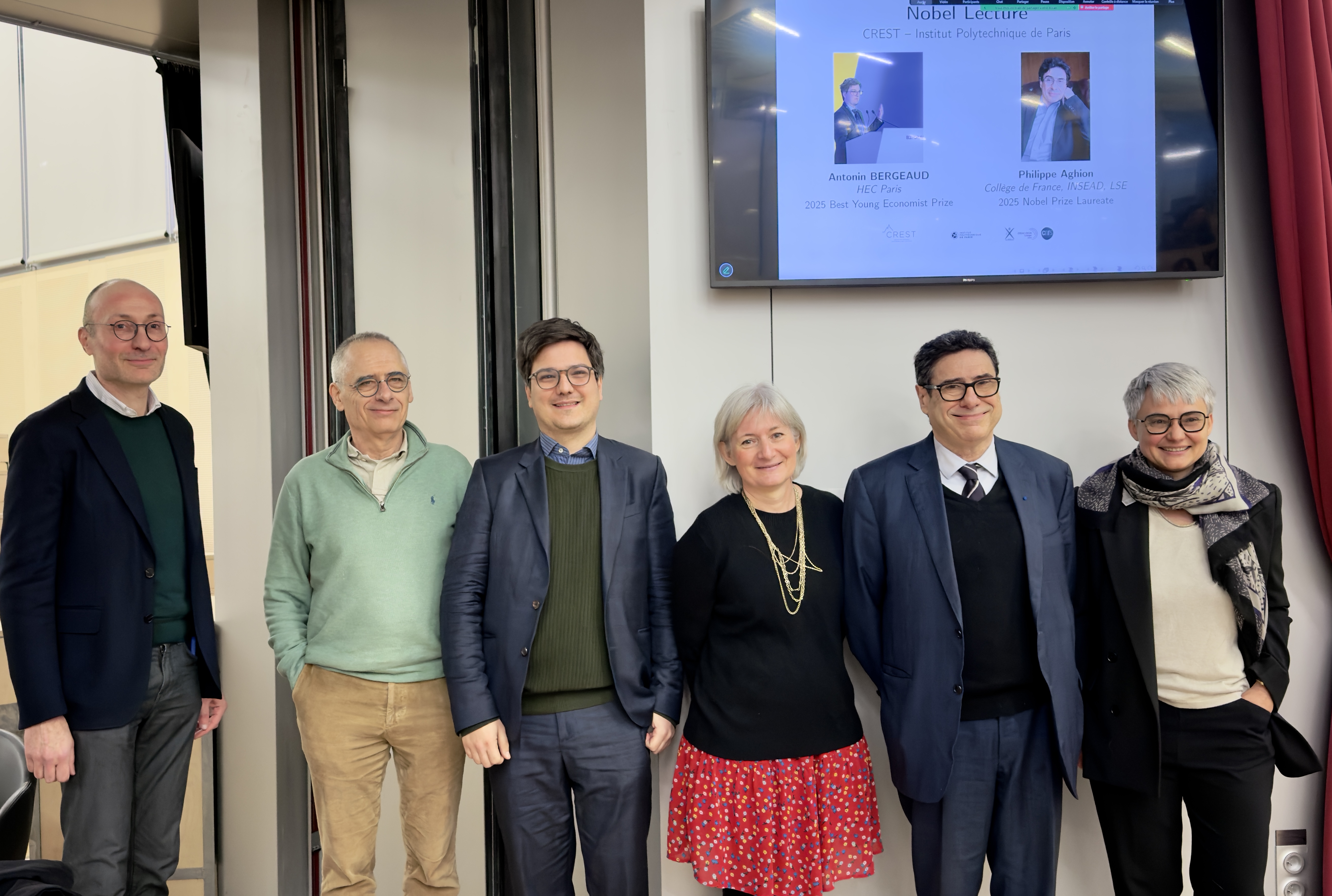
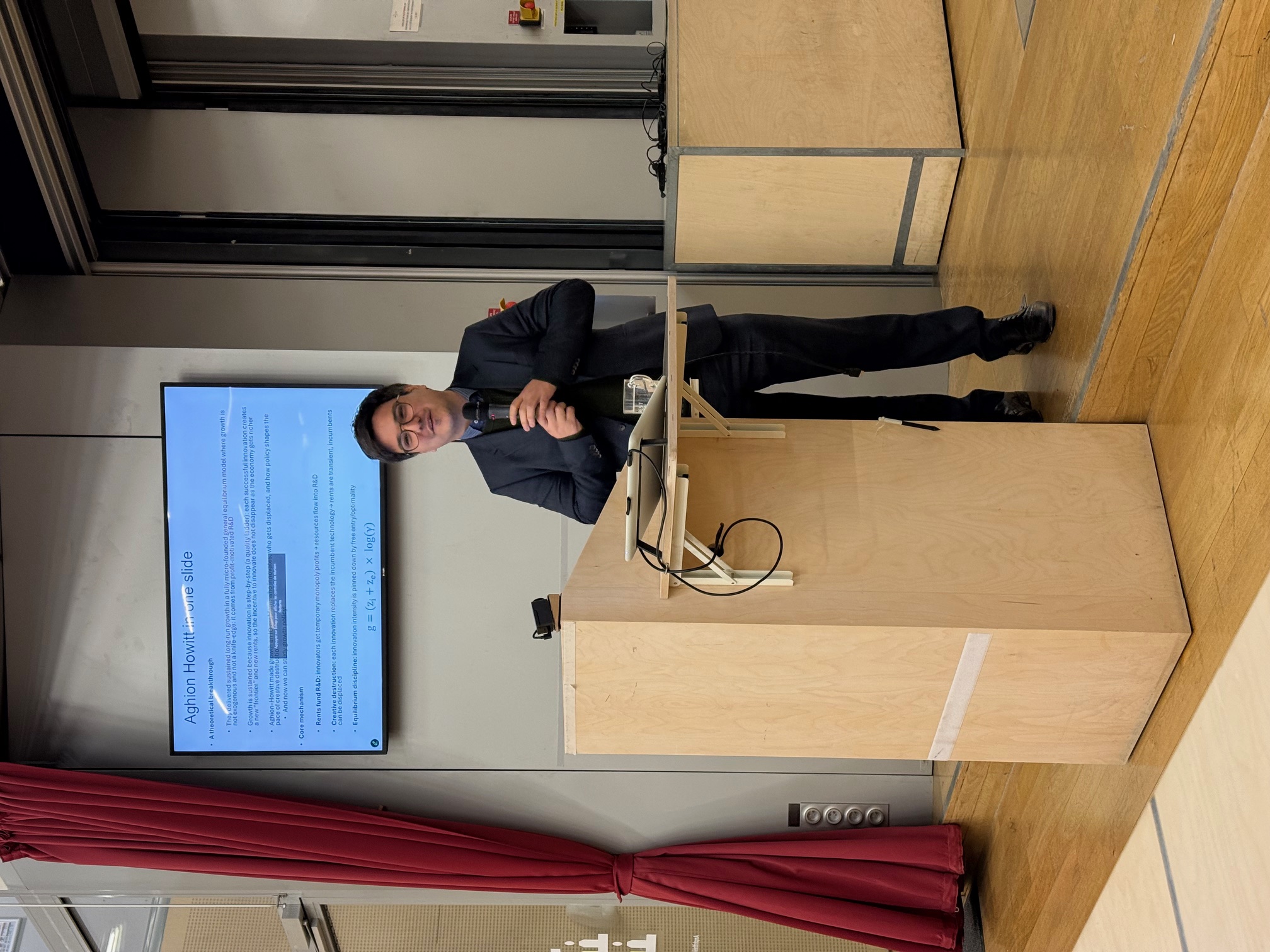
The lecture opened with remarks by Antonin Bergeaud, who offered a personal and insightful introduction to Philippe Aghion’s work. Using the language of Schumpeterian growth, he highlighted the breadth of Aghion’s research agenda and the remarkable influence it has had across fields, institutions, and generations of economists.
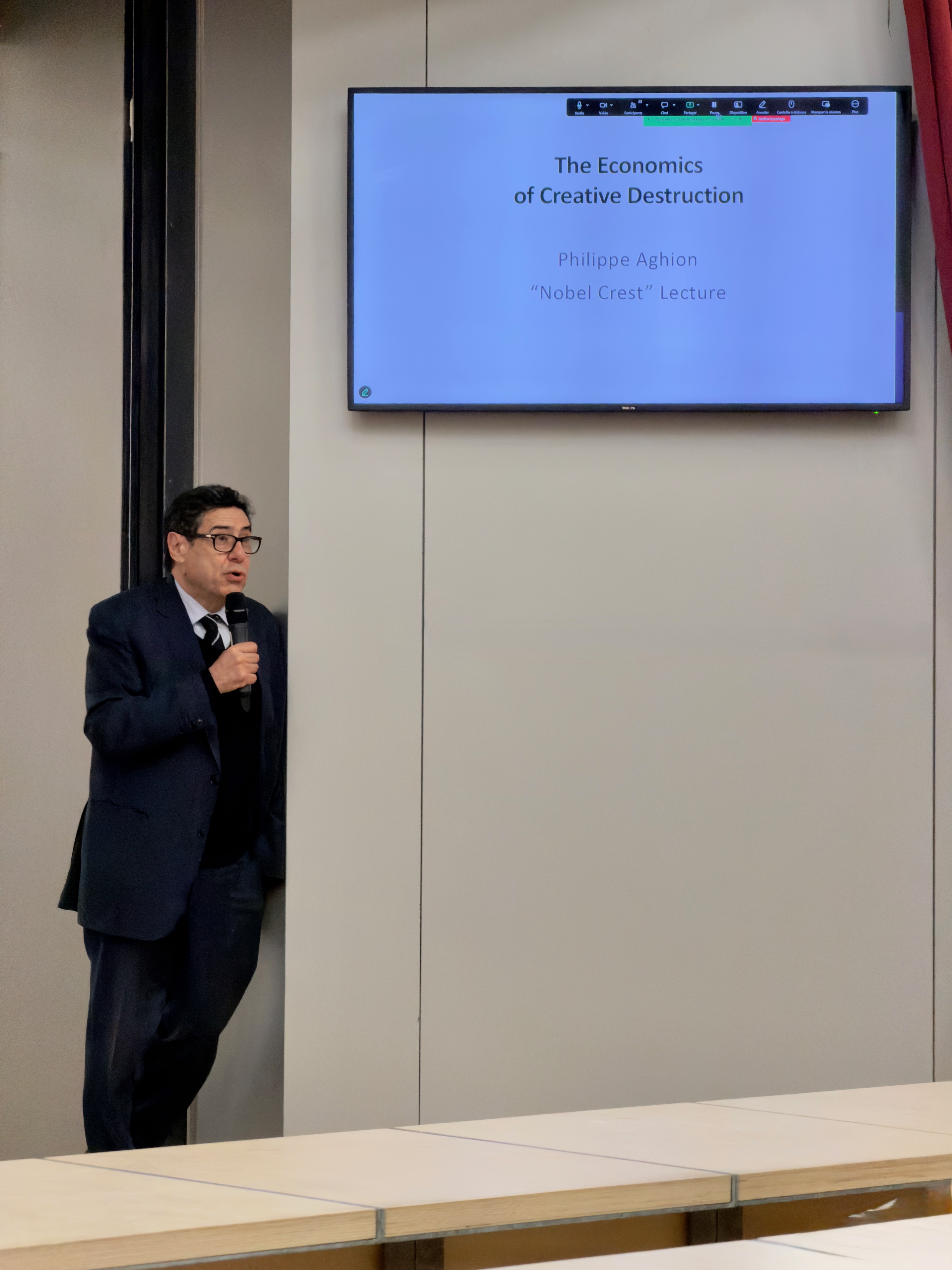
Philippe Aghion then took the floor for his lecture, The Economics of Creative Destruction. Returning to the foundations of the Aghion-Howitt model, he explained how long-run growth emerges from a steady process of innovation, in which new ideas and technologies continuously replace older ones. This framework, he argued, remains a powerful tool for understanding some of today’s most pressing economic questions.
Throughout the lecture, Aghion illustrated how the concept of creative destruction helps make sense of historical and contemporary challenges, from industrial take-off to periods of slow growth, as well as the difficulties faced by middle-income countries. A recurring theme was the role of competition: not only as a driver of innovation, but also as a condition for the diffusion of new technologies and the renewal of economic activity.
The discussion also addressed the tensions between innovation, market concentration, and inequality. Philippe Aghion stressed that innovation-led growth does not have to come at the expense of social cohesion, provided that the right policy framework is in place. In this respect, he argued that elements of the American and European models can be combined, rather than opposed, notably through education, labor market institutions, and competition policy.
In the final part of the lecture, Philippe Aghion turned to the economic implications of artificial intelligence. While acknoledging its considerable potential for productivity gains and new forms of job creation, he also emphasized the importance of competition and skills in ensuring that these benefits are broadly shared.
Conference replay
The full lecture is now available on the CREST YouTube channel.